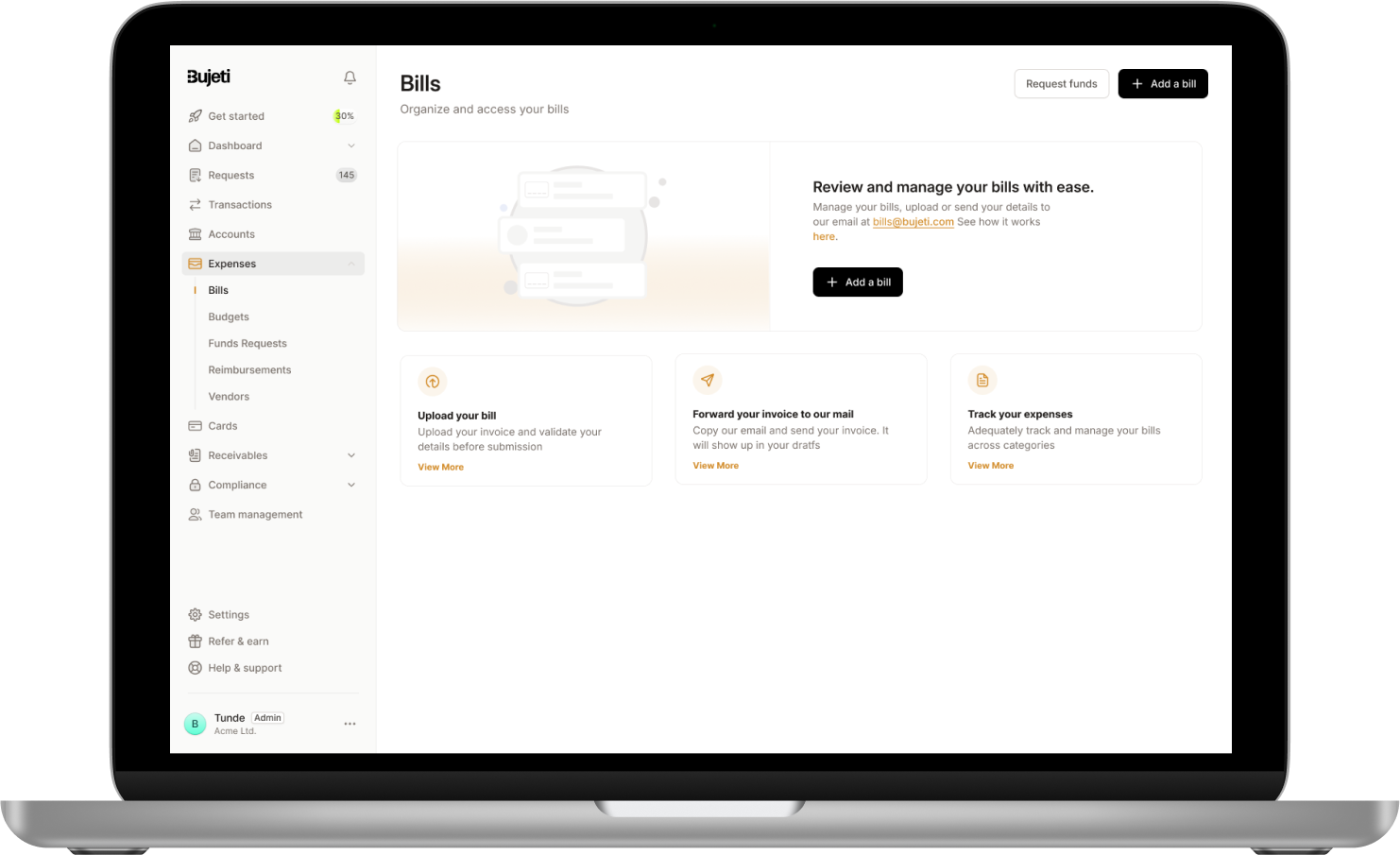
The problem
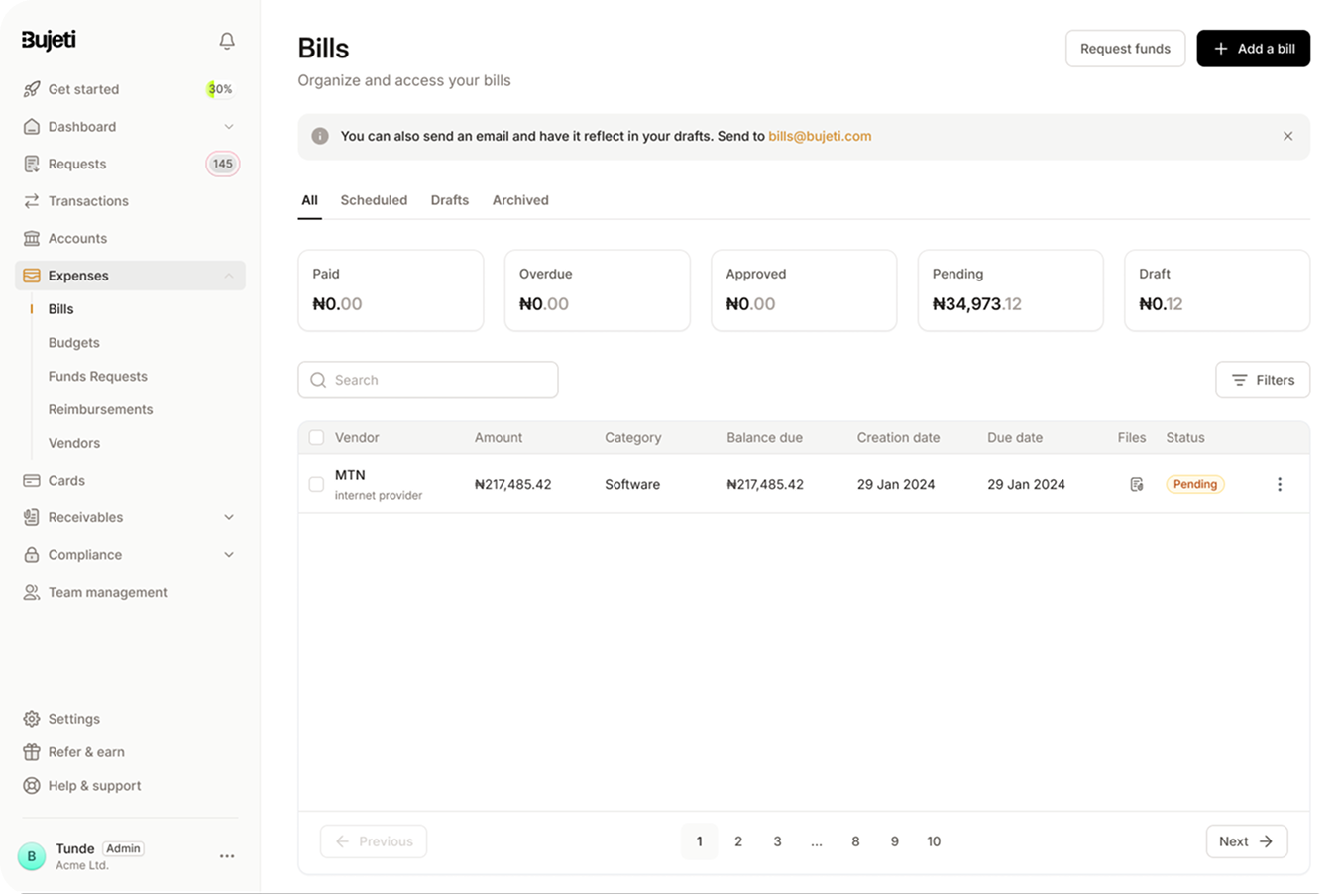
Bujeti is spend management for businesses — budgets, cards, and customer invoicing all lived on the platform. But that only covered money coming in. The money a company owed — supplier invoices for work already delivered — lived everywhere else: arriving in email, tracked by hand in spreadsheets, paid from a separate bank app. Invoices got lost in inboxes, and what a company actually owed was a month-end surprise instead of a number anyone could see.
Customers were asking for it directly. Bills became the missing mirror of the invoicing we already had: accounts payable, inside the platform — captured in seconds, visible in one place, and paid under the company’s own controls.
most-requested feature in customer conversations
of customers tracked supplier payments in spreadsheets
bills surfaced late — lost in email or discovered at month-end
“How might we let any employee capture a bill in seconds — while making sure no payment leaves the company without the right eyes on it?”
Capture — a bill in seconds, not a form
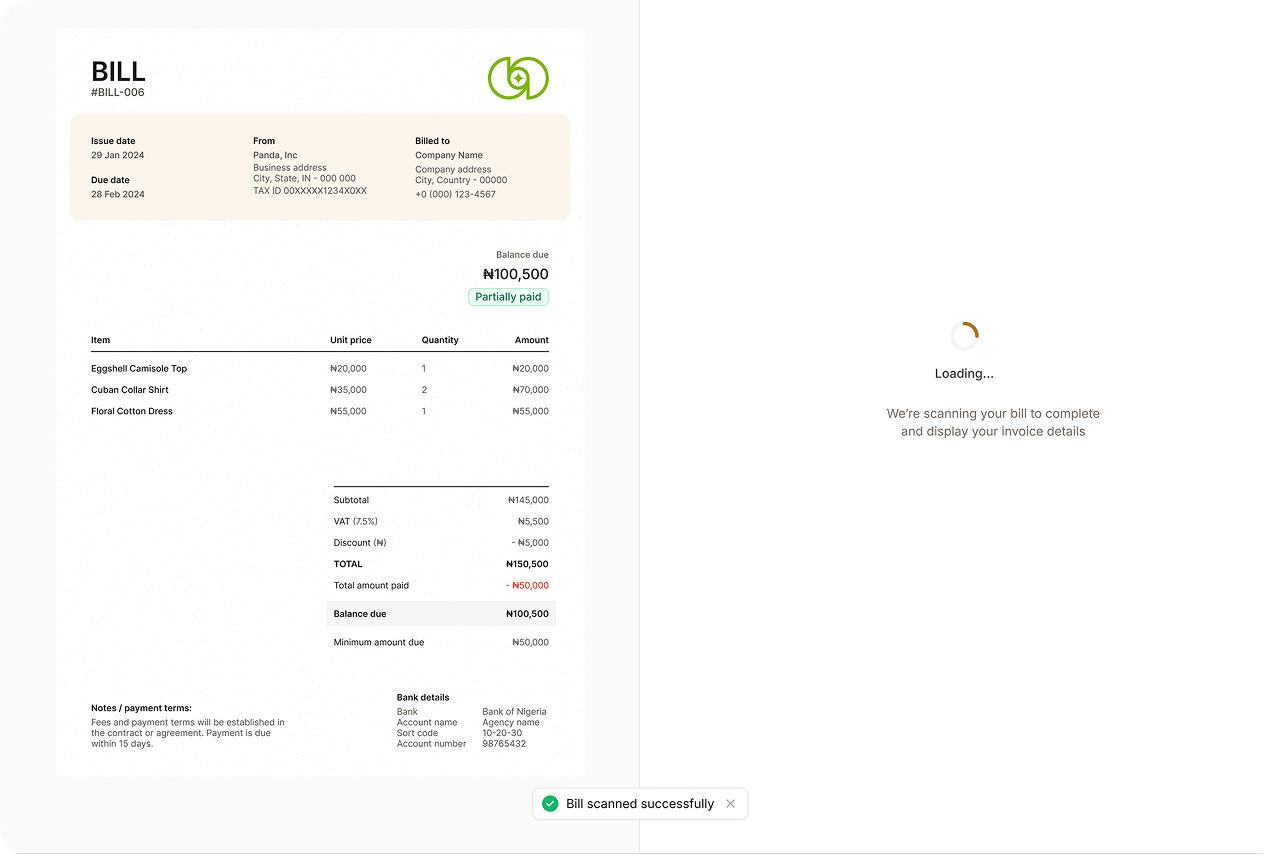
Competitive research and customer conversations pointed at the same adoption killer: data entry. Nobody re-types an invoice into a form — they keep the spreadsheet. So capture had to meet invoices where they actually arrive.
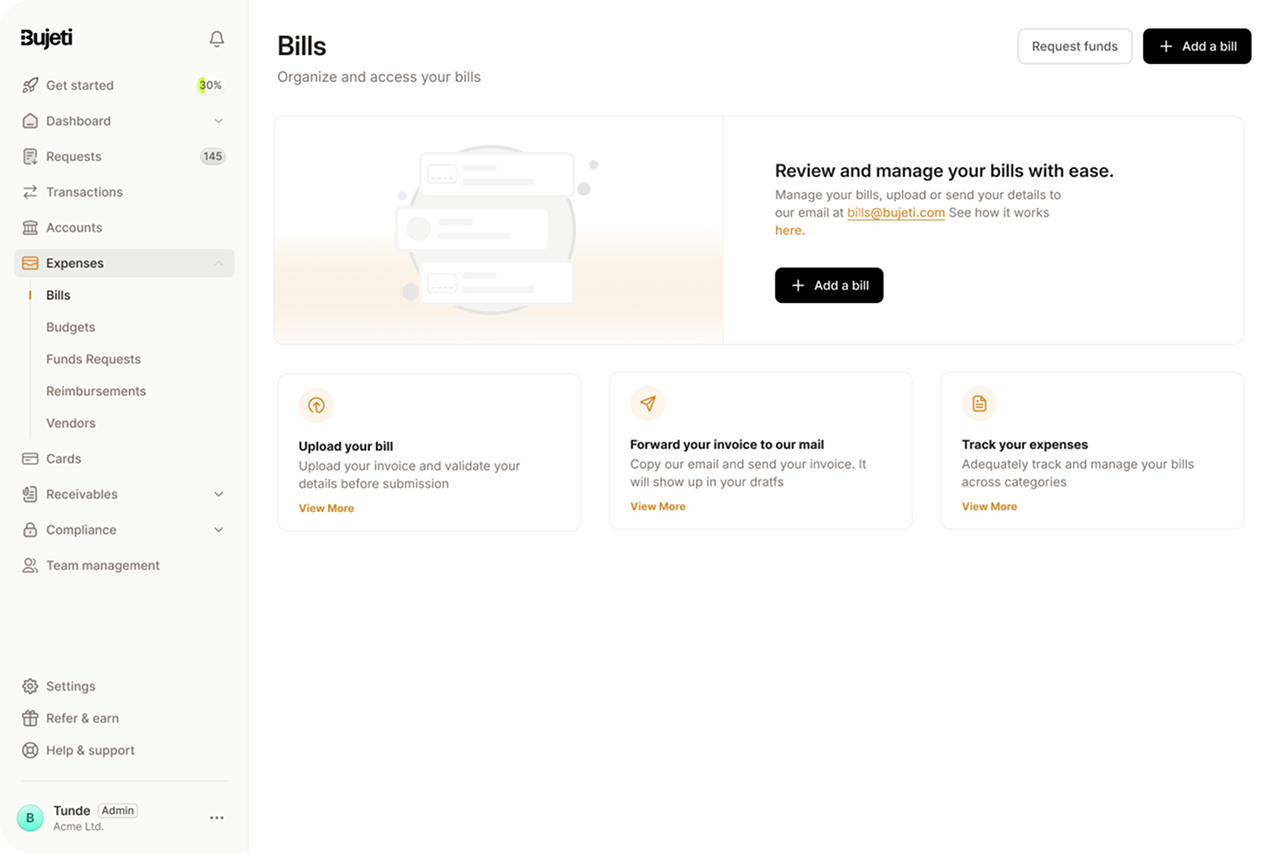
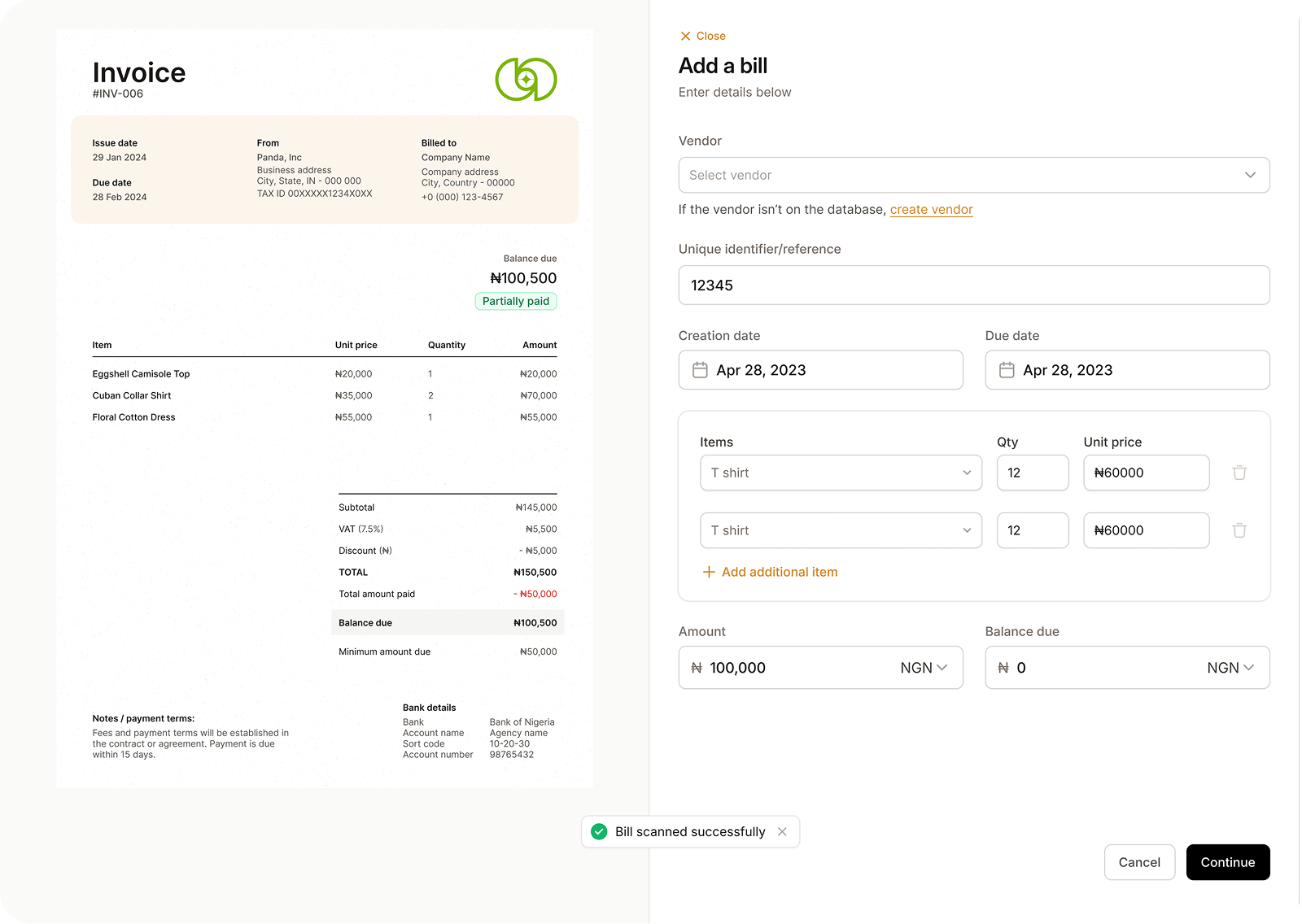
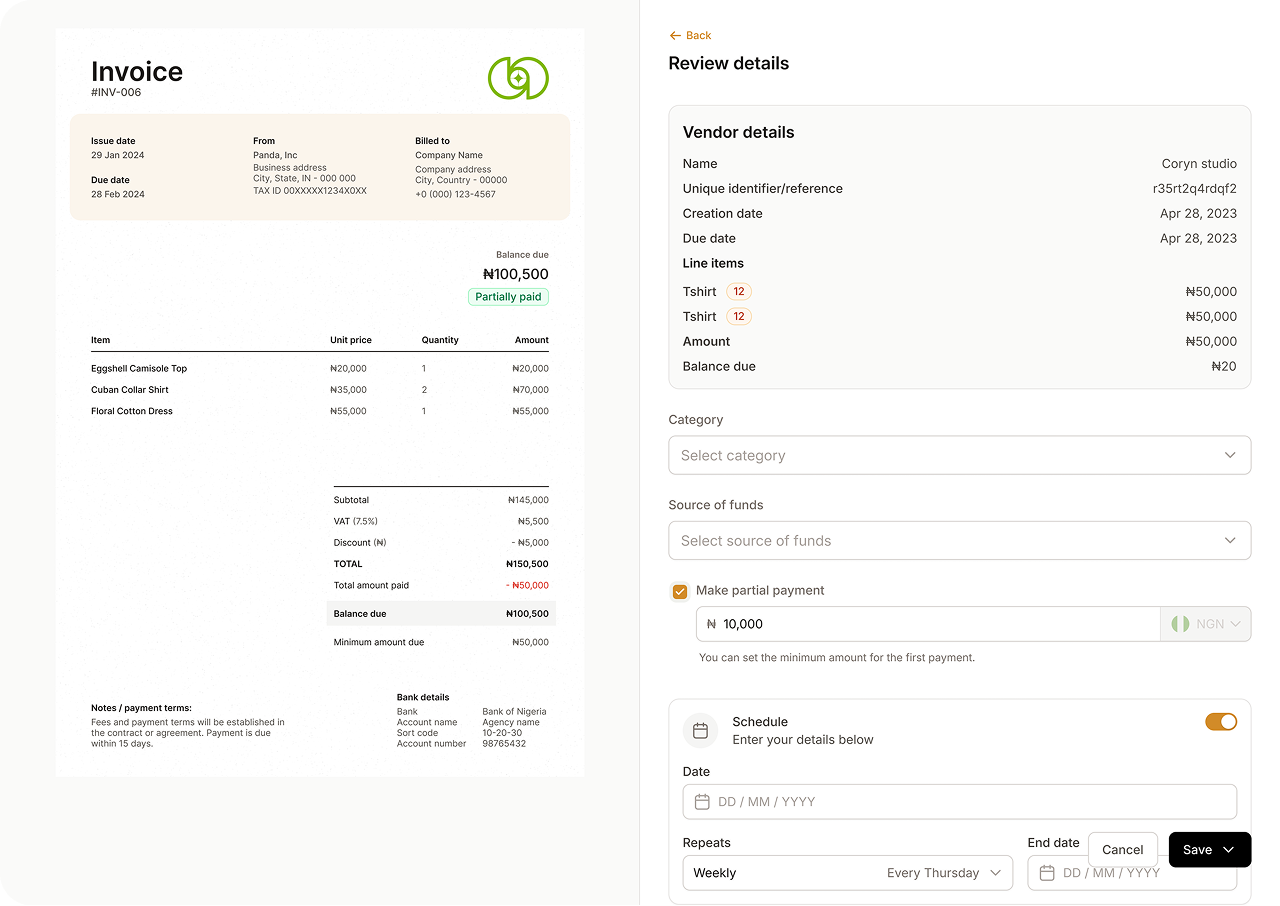
Two paths in: upload the invoice and OCR reads it — amounts, vendor, dates pre-filled — or forward it to a dedicated email address and it lands in drafts on the platform. The inbox stopped being where bills got lost and became the way they got captured.
Upload your invoice
Autonomy with oversight — the approval flow
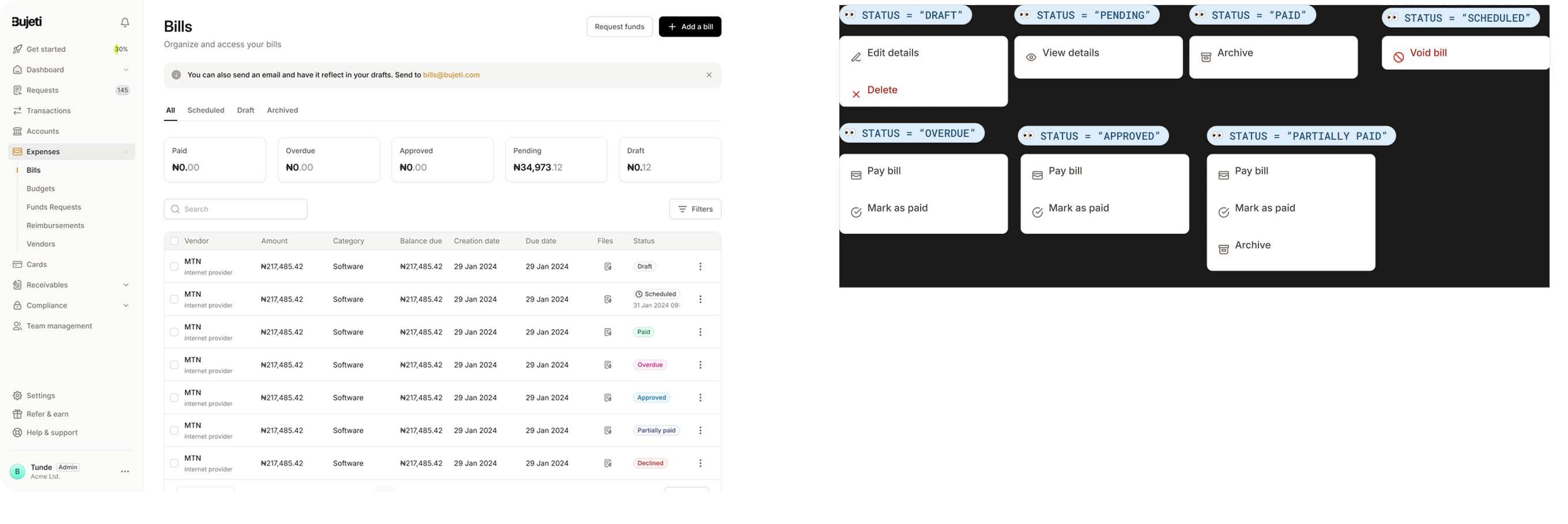
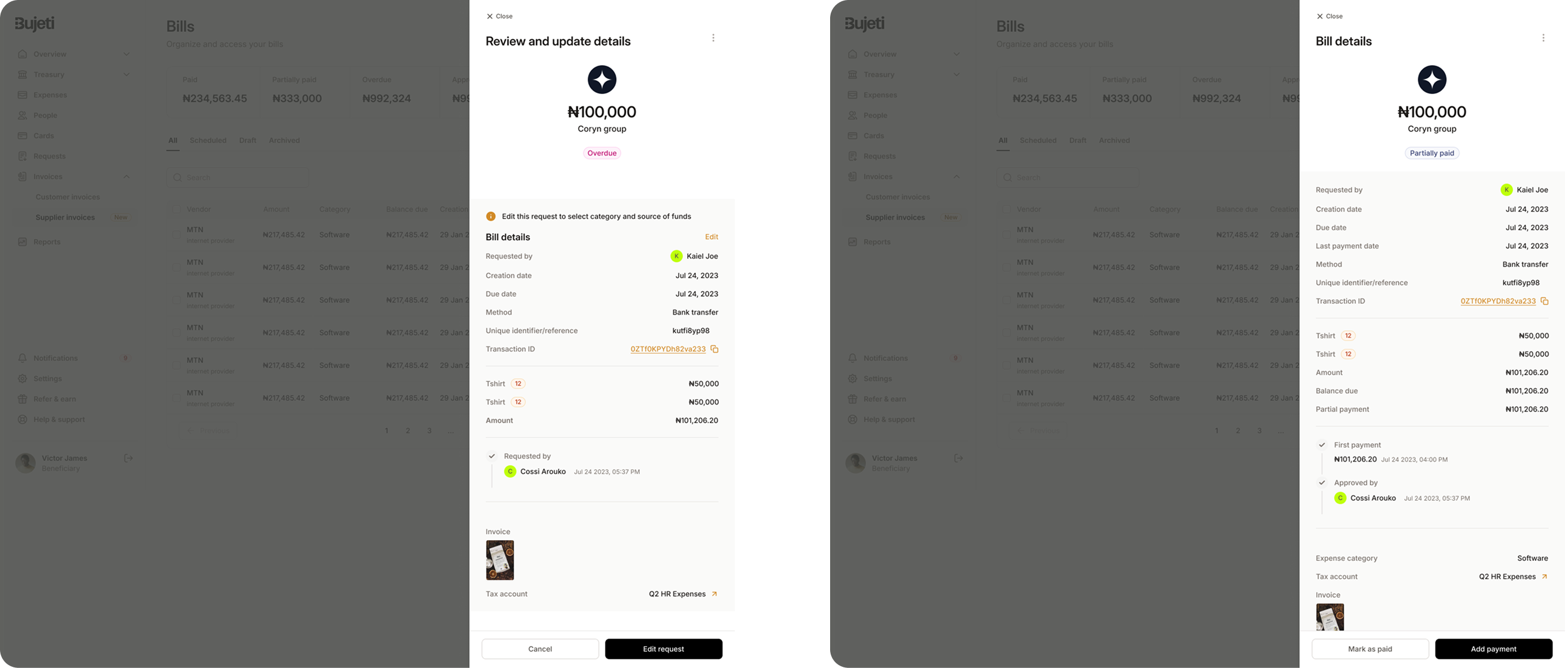
This was the real design problem. Money leaving a company needs control — but if control means every bill queues behind one person, teams route around the product and you’re back to spreadsheets. So the flow is role-based: an employee captures a bill, scopes it — category, source of funds — saves it partially, or submits it and pulls in an approver. Nothing they aren’t permitted to do is offered to them.
An admin reviews on the other side — editing or approving based on the permissions the employee holds. The payment only moves once the right eyes have been on it. Everyday capture stays effortless; the consequential step carries the weight.
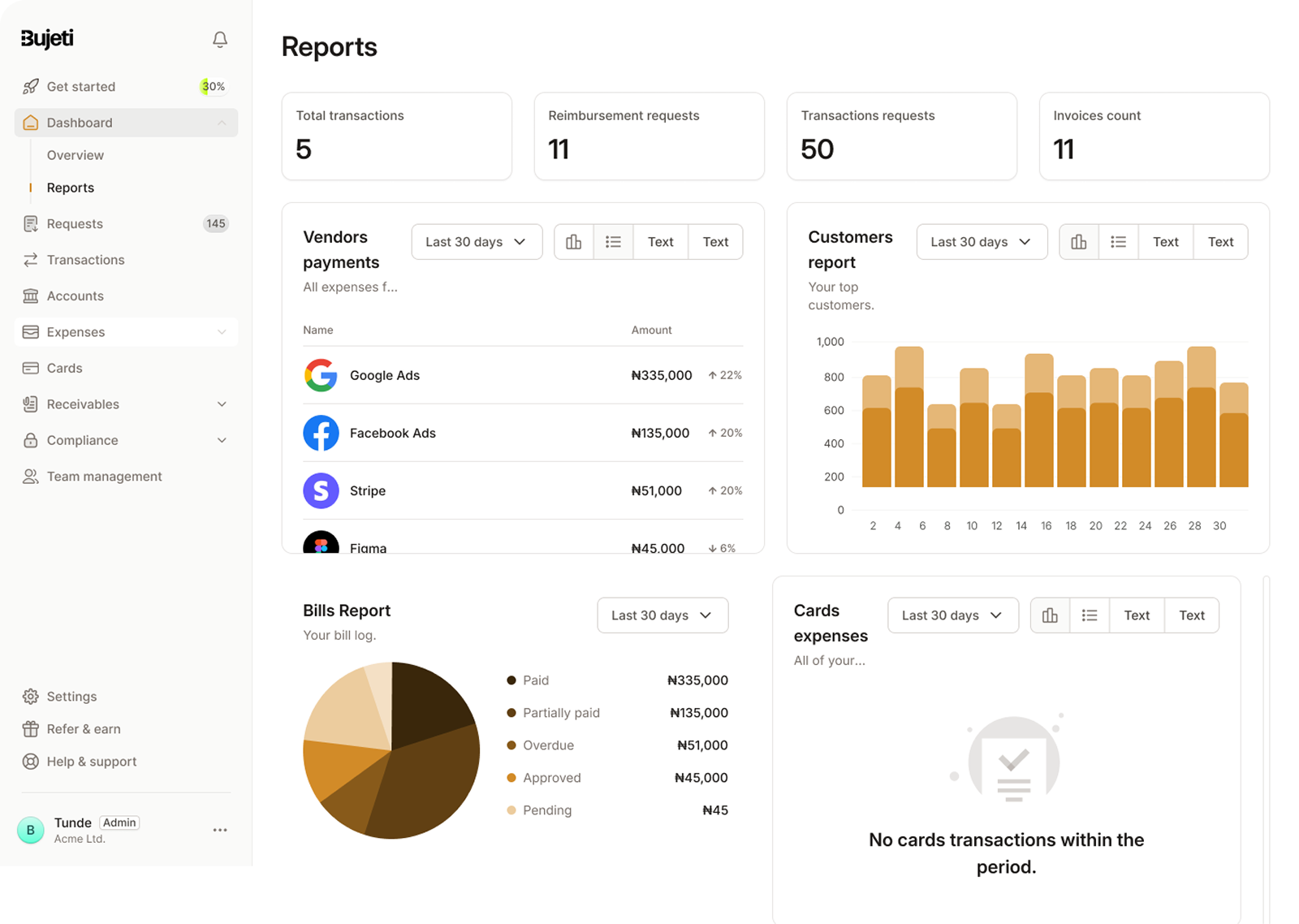
How I worked
I translated the PRD into flows, ran competitive research on how supplier-invoice products handle capture and approvals, and led scoping sessions with customers, engineers, and customer success to align on what version one had to do. At launch I partnered with marketing on the materials that drove adoption.
Outcomes
total payment volume — payables money moved onto the platform
user engagement — bills gave teams a daily reason to be in Bujeti
paid subscriptions — payables became part of the paid tier
How we measured it
Beyond the headline numbers, we instrumented the funnel in three layers: did capture get effortless, did the approval flow hold, and did the old workaround die.
to capture a bill — OCR pre-fill and email forwarding replaced the form.
median submission-to-approval — and every paid bill carried a completed approval chain, because it’s the only path.
of companies still keeping a parallel spreadsheet within a quarter — the honest test of a replacement feature is whether people stop doing the old thing.
Map permission structures early — with employees, managers, and admins in one flow, every touchpoint is a balance of autonomy and oversight. Approval flows have to flex across very different organisational structures without adding friction to the everyday path. Capture should be effortless; moving money should carry weight. That asymmetry — friction proportional to consequence — is now how I design anything that touches money or power.